
If you want to to increase nitric oxide (NO) through breathing, the key is simple:
Use your nose properly, create airflow oscillation, and manipulate breath timing.
This post tells you how to do it effectively.

1. Prioritise Nasal Inhalation
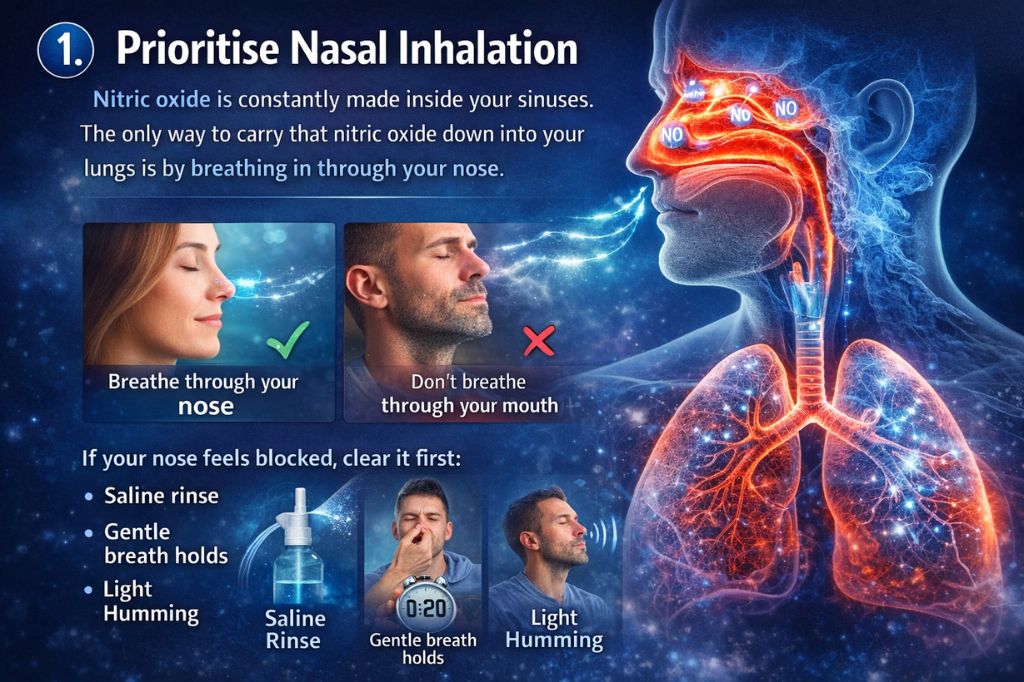
Nitric oxide is constantly made inside your sinuses.
The only way to carry that nitric oxide down into your lungs is by breathing in through your nose.
If you breathe through your mouth, you skip this system and get much less nitric oxide.
Simple rule:
At rest, during light activity, and ideally while sleeping — breathe through your nose.
If your nose feels blocked, clear it first. You can try a saline rinse, a few gentle breath holds, or some light humming.
2. Use Humming to Increase Nasal NO
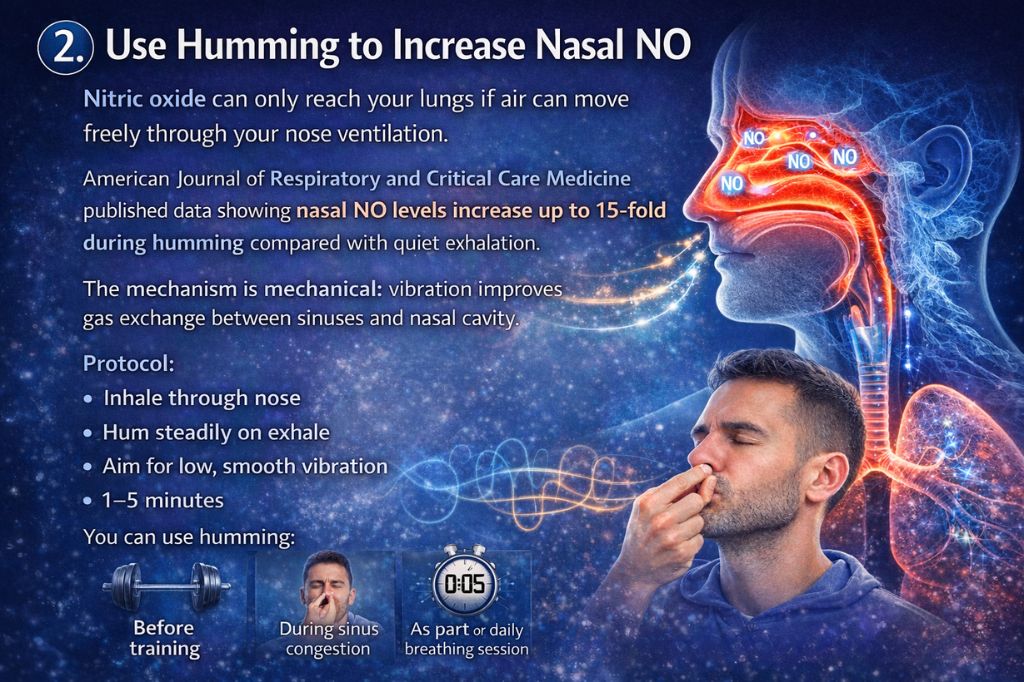
Humming dramatically increases nitric oxide production by improving sinus ventilation.
American Journal of Respiratory and Critical Care Medicine published data showing nasal NO levels increase up to 15-fold during humming compared with quiet exhalation.
The mechanism is mechanical: vibration improves gas exchange between sinuses and nasal cavity.
Protocol:
- Inhale through nose
- Hum steadily on exhale
- Aim for low, smooth vibration
- 1–5 minutes
You can use humming:
- Before training
- During sinus congestion
- As part of a daily breathing session
This is the fastest breathing-based way to elevate nasal NO.
3. “Nose In – Mouth Out” Cycles
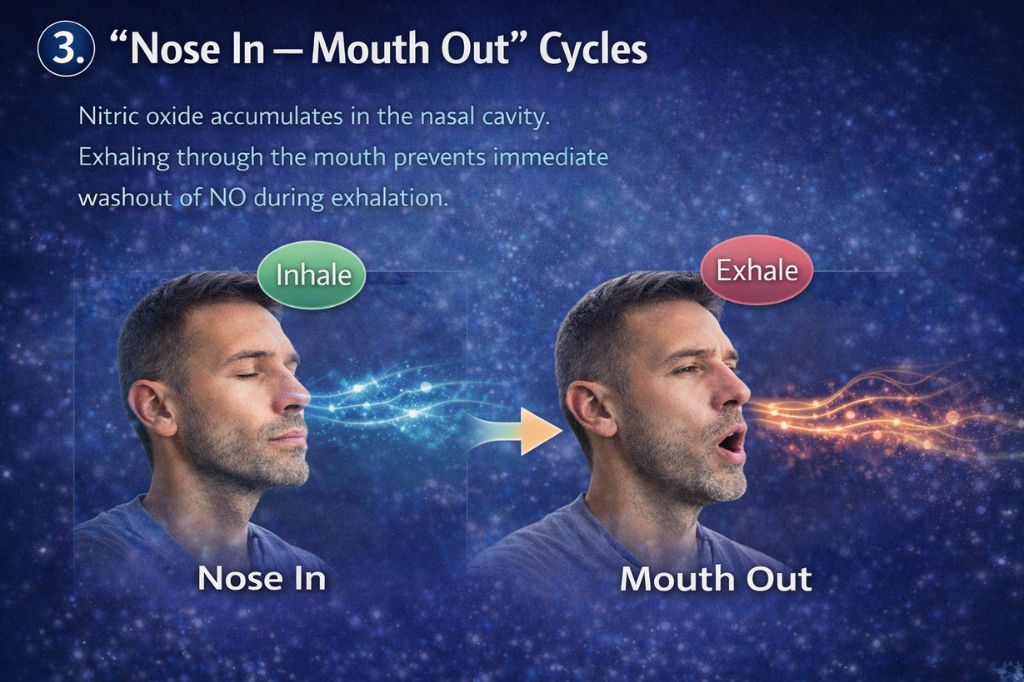
Nitric oxide accumulates in the nasal cavity. Exhaling through the mouth prevents immediate washout of NO during exhalation.
Research suggests:
- Inhale through nose
- Exhale through mouth
This can increase tissue oxygenation compared to mouth-in/nose-out breathing.
Use this strategically:
- At the start of breathwork
- During intense exercise
- When nasal-only breathing feels restrictive
Then return to nasal-only breathing once settled.
4. Slow, Controlled Breathing (5–6 Breaths per Minute)
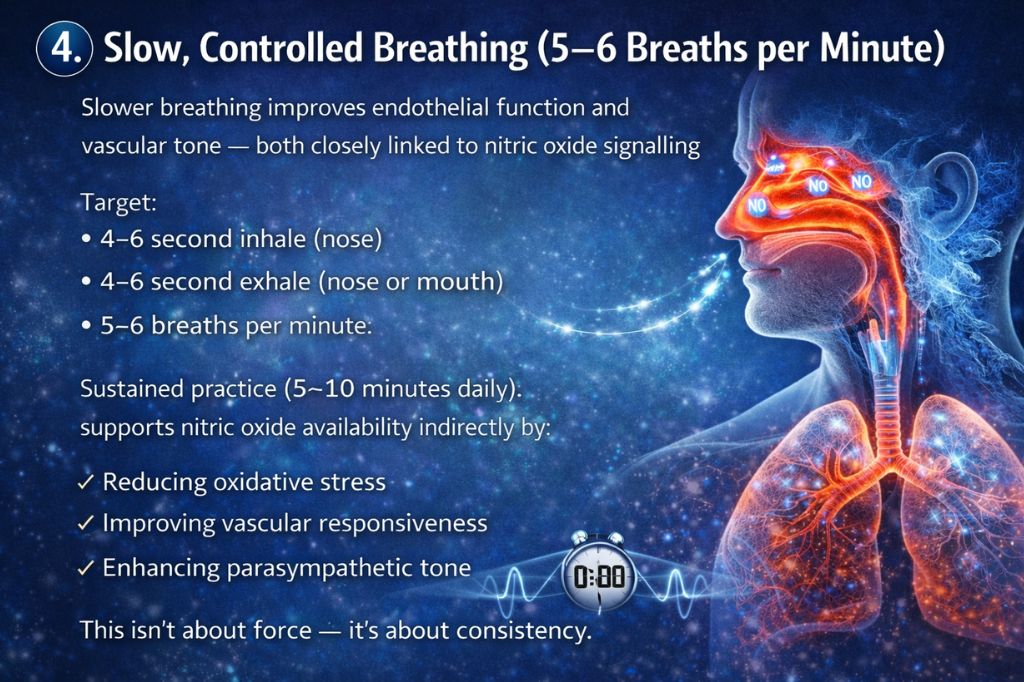
Slower breathing improves endothelial function and vascular tone — both closely linked to nitric oxide signalling.
Target:
- 4–6 second inhale (nose)
- 4–6 second exhale (nose or mouth)
- 5–6 breaths per minute
Sustained practice (5–10 minutes daily) supports nitric oxide availability indirectly by:
- Reducing oxidative stress
- Improving vascular responsiveness
- Enhancing parasympathetic tone
This isn’t about force — it’s about consistency.
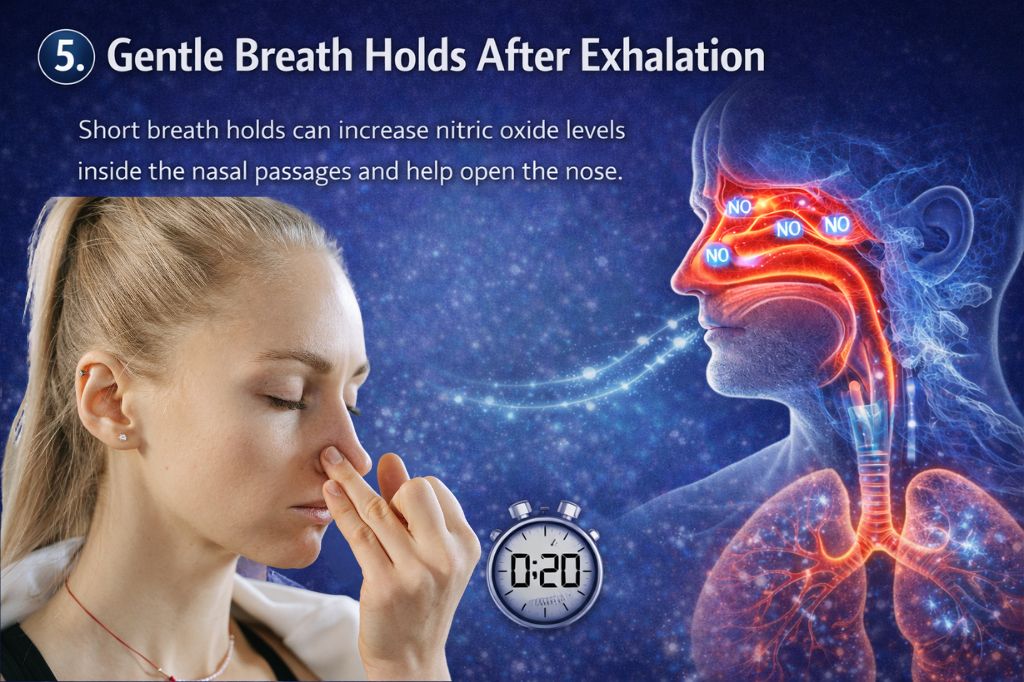
5. Gentle Breath Holds After Exhalation
Short breath holds can increase nitric oxide levels inside the nasal passages and help open the nose.
When you briefly hold your breath after exhaling, nitric oxide builds up in the sinuses. This can lower nasal resistance and make breathing through your nose easier.
How to do it:
- Inhale through your nose
- Exhale gently through your nose
- Hold your breath for 10–30 seconds (only until mild air hunger, no strain)
- Resume calm nasal breathing
You should feel a slight urge to breathe, not panic or pressure.
This method can temporarily reduce nasal congestion.
Do not push into long or maximal breath holds unless you are specifically trained to do so.
6. Maintain Nasal Patency
Nitric oxide can only reach your lungs if air can move freely through your nose.
If your nasal passages are blocked, it doesn’t matter how much nitric oxide your sinuses produce — you won’t deliver much of it where it’s needed.
To support proper nasal airflow:
- Stop habitual mouth breathing
- Avoid overusing strong antiseptic mouthwash (oral bacteria help convert nitrate into nitric oxide)
- Manage allergies or structural blockages
- Keep indoor air slightly humid if it’s very dry
If your nose is constantly congested, nitric oxide delivery will be reduced. Clear airflow is essential.

Practical 5-Minute NO Breathing Session
If you want something structured:
- 1 minute nasal breathing
- 2 minutes humming
- 2 minutes slow 5–5 breathing
- Optional: 3–5 short breath holds
Simple. Repeat daily.
Final Takeaway
To increase nitric oxide through breathing:
- Breathe in through your nose — this is essential.
- Use humming — it gives the biggest short-term rise in nasal nitric oxide.
- Slow your breathing — this supports healthy blood vessel function and nitric oxide signalling.
- Add short breath holds after exhaling — this allows nitric oxide to build up in the nasal passages.
This is not a theory or a mindset shift. It’s physiology.
How you breathe directly affects how much of your body’s naturally produced nitric oxide actually reaches the lungs and circulation.

DoNotAge Nitralis®
This is the nitric oxide booster I’ve been testing to support circulation, performance, and healthy aging.
Use code NURSE for 10% off (affiliate link)
Shop Nitralis →