What if I told you that one of the longest-living mammals on the planet owes part of its resilience to a simple, gooey molecule?
It sounds strange, but scientists studying longevity discovered that the naked mole-rat — a tiny rodent that barely gets cancer and lives far longer than it should — produces huge amounts of hyaluronic acid.
Yes, the same hyaluronic acid you see in skincare serums.
Once I learned that, I stopped thinking of it as just a “plumping ingredient” and started seeing it as something much more interesting.
So let’s talk about the real benefits of Hyaluronic Acid supplements — and why this humble molecule might be far more powerful than most people realise.
What Is Hyaluronic Acid?
Hyaluronic acid is often marketed as a skincare ingredient.
In reality, it’s part of your body’s structural system.
It’s found in your skin, your joints, and the connective tissue that holds everything together. Its job is simple but powerful: it attracts and holds water, keeping tissues cushioned, resilient, and able to move smoothly.
When you’re young, levels are high. Skin feels firm. Joints move easily. Recovery is faster.
As you age, production gradually declines. Hydration drops. Tissues lose some of their elasticity. Structural resilience starts to weaken.
From a longevity perspective, this is where it gets interesting.
Aging is not just about visible wrinkles. It’s about the slow loss of internal support and hydration at a tissue level. Hyaluronic acid sits right in the middle of that process.
That is why scientists studying long-lived species became so interested in it.
The Longevity Connection
Here’s where things get fascinating.
Researchers studying longevity were not looking for better skincare. They were trying to understand why some animals live far longer than they should — and why they rarely get cancer.
One of those animals is the naked mole-rat.
For its size, it lives up to ten times longer than a mouse. Even more surprising, it barely develops cancer and does not show the typical signs of age-related decline.
When scientists looked closer, they discovered something unusual. Naked mole-rats produce extremely high levels of a specific form of hyaluronic acid. Not the short version humans make — but a very long, high molecular weight form.
This thicker, more elastic version appears to:
- Prevent uncontrolled cell growth
- Improve tissue integrity
- Contribute to their remarkable disease resistance
That discovery changed how researchers viewed this molecule.
Hyaluronic acid was no longer just about plump skin. It became a structural and protective factor linked to resilience.
Other long-lived species use different biological strategies. The point is not that hyaluronic acid is the only answer. The point is that nature repeatedly shows us that tissue integrity and cellular protection are central to longevity.
That is why this molecule is so interesting.
It supports hydration, yes.
It supports structure, yes.
It may also be part of the deeper conversation about aging well.
In the TED talk below, aging researcher Vera Gorbunova, PhD explains how studying the naked mole-rat led to the discovery of high molecular weight hyaluronan and its role in cancer resistance.
Hyaluronic Acid Supplements Benefits in Humans
The naked mole-rat research is fascinating.
The real question is: what does this mean for us?
While we do not produce the same ultra-long version of hyaluronic acid, human studies show that supplementation can still provide meaningful benefits.
Here’s what the evidence supports.
1. Skin Hydration and Elasticity
This is the benefit most people notice first.
Clinical studies show that oral hyaluronic acid can:
- Increase skin moisture
- Improve elasticity
- Reduce the appearance of fine lines
The reason is simple. Hyaluronic acid helps tissues hold onto water. When hydration improves from within, skin looks smoother and feels more resilient.
This is different from applying it topically. A serum works at the surface. A supplement supports the deeper layers of the skin.
For women over 40 especially, internal hydration becomes increasingly important as natural production declines.
2. Joint Lubrication and Comfort
Hyaluronic acid is a key component of synovial fluid — the liquid that cushions your joints.
As levels decline with age, joints can feel less fluid and more stiff.
Studies suggest supplementation may:
- Reduce mild knee discomfort
- Improve joint function
- Support mobility
For anyone lifting weights, training hard, or simply wanting to stay active long-term, joint lubrication matters.
Longevity is not just about living longer. It is about moving well for longer.
3. Structural Support and Recovery
Beyond skin and joints, hyaluronic acid plays a role in connective tissue throughout the body.
Hydrated tissues:
- Glide more easily
- Recover better
- Maintain elasticity
As part of a broader longevity strategy, supporting structural integrity helps maintain resilience over time.
This is not a quick fix supplement. It supports something foundational. Find out more about the benefits of hyaluronic acid supplements in the video below.
Are Hyaluronic Acid Supplements Actually Absorbed?
Hyaluronic acid is a large molecule, so it is reasonable to question whether it survives digestion.
Research suggests that after oral intake, hyaluronic acid is partially broken down in the gut into smaller fragments. These fragments can then be absorbed and distributed to tissues such as the skin and joints. Some evidence also suggests it may stimulate the body’s own hyaluronic acid production.
Human clinical trials show improvements in skin hydration after several weeks of supplementation, which indicates that it does have biological effects beyond the digestive system.
The key factors that influence effectiveness appear to be molecular weight, dose, and overall quality.
Why Molecular Weight Matters
Hyaluronic acid exists in different sizes, known as molecular weights.
Some forms are shorter chains. Others are much longer and heavier. This difference influences how they behave biologically.
High molecular weight (HMW) hyaluronic acid is generally associated with structural stability and anti-inflammatory signalling. Lower molecular weight fragments can, in certain contexts, trigger inflammatory pathways.
This is part of what made the naked mole-rat discovery so compelling. These animals produce extremely high molecular weight hyaluronan, which appears to contribute to their tissue resilience and cancer resistance.
This does not mean that taking a supplement will replicate naked mole-rat biology. Human products are not identical to the ultra-long version found in those animals.
Many researchers believe that beginning with a high molecular weight source makes sense when the goal is structural and anti-inflammatory support.
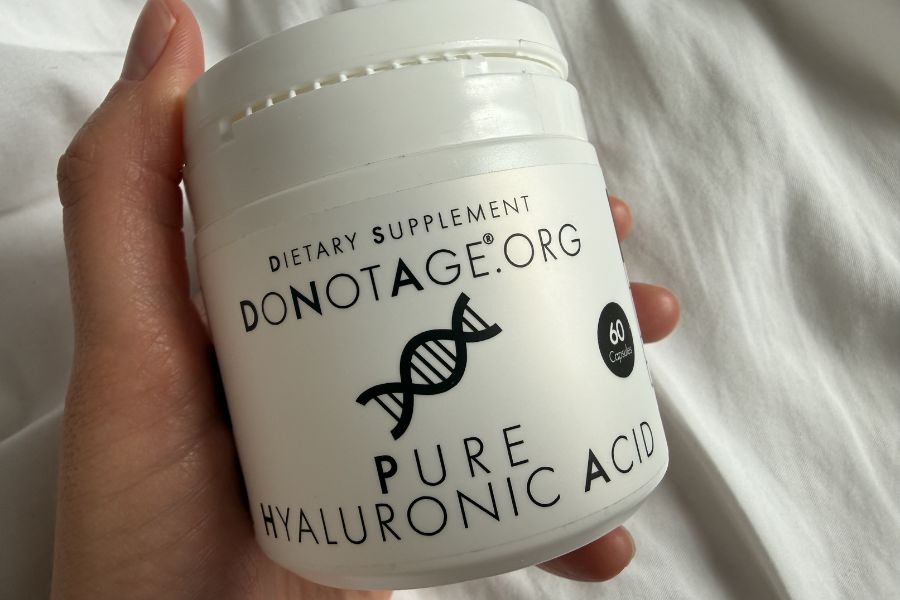
Why I Personally Use DoNotAge Hyaluronic Acid
When I choose a supplement, I look at three things:
- Molecular weight
- Purity
- Alignment with longevity research
DoNotAge use high molecular weight hyaluronic acid, which fits more closely with the type associated with structural integrity in the research.
They also focus on purity and research-grade production standards, which matters in a category where quality can vary significantly.
For me, it fits naturally into a longevity-focused routine that supports connective tissue, hydration, and long-term resilience.
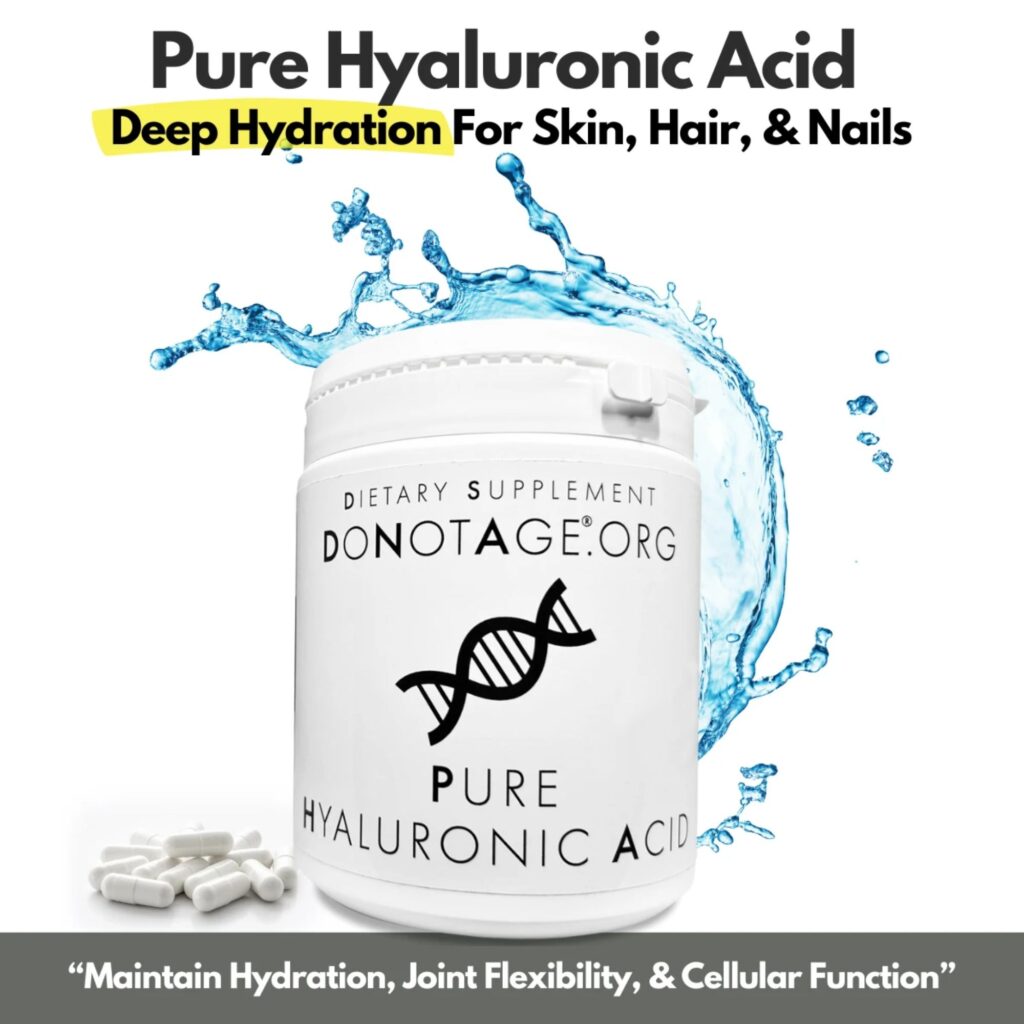
I have a partnership with DoNotAge. If you’d like to try their Pure Hyaluronic Acid, you can get 10% off using my discount code:
Final Thoughts: Is Hyaluronic Acid a Longevity Molecule?
For centuries, people searched for a fountain of youth.
Modern science is not looking for magic water. It is looking for biological mechanisms that help tissues stay resilient for longer.
Hyaluronic acid is one of those mechanisms.
It supports hydration.
It supports structure.
It supports joint lubrication.
It plays a role in how our tissues age.
The naked mole-rat research does not prove that a supplement will extend human lifespan. What it does show is that structural integrity and cellular protection matter far more than we once realised.
Aging well is rarely about one miracle compound. It is about supporting the systems that quietly decline over time.
Hyaluronic acid sits right at the centre of that structural system.
For me, it is not just about smoother skin. It is about maintaining resilience from the inside out.
And that is a far more interesting conversation than wrinkle cream.