Spermidine is a naturally occurring compound found in your body and in many foods such as wheat germ, mushrooms, soybeans, and aged cheese. It belongs to a group of molecules called polyamines, which play an essential role in cell growth, repair, and regeneration.
In recent years, spermidine has gained attention in the longevity and biohacking world because of its ability to activate autophagy - the body’s natural cellular clean-up process. Autophagy helps remove damaged cellular components and recycle them, allowing cells to function more efficiently.
Research suggests that spermidine levels naturally decline with age, which may contribute to many age-related changes in the body. Increasing dietary intake through food or supplements may therefore help support healthy aging.
Below are some of the most researched spermidine benefits.

DoNotAge Pure Spermidine
This is the spermidine supplement I personally recommend for supporting autophagy, cellular renewal, and healthy aging.
Use code NURSE for 10% off (affiliate link)
Shop Spermidine →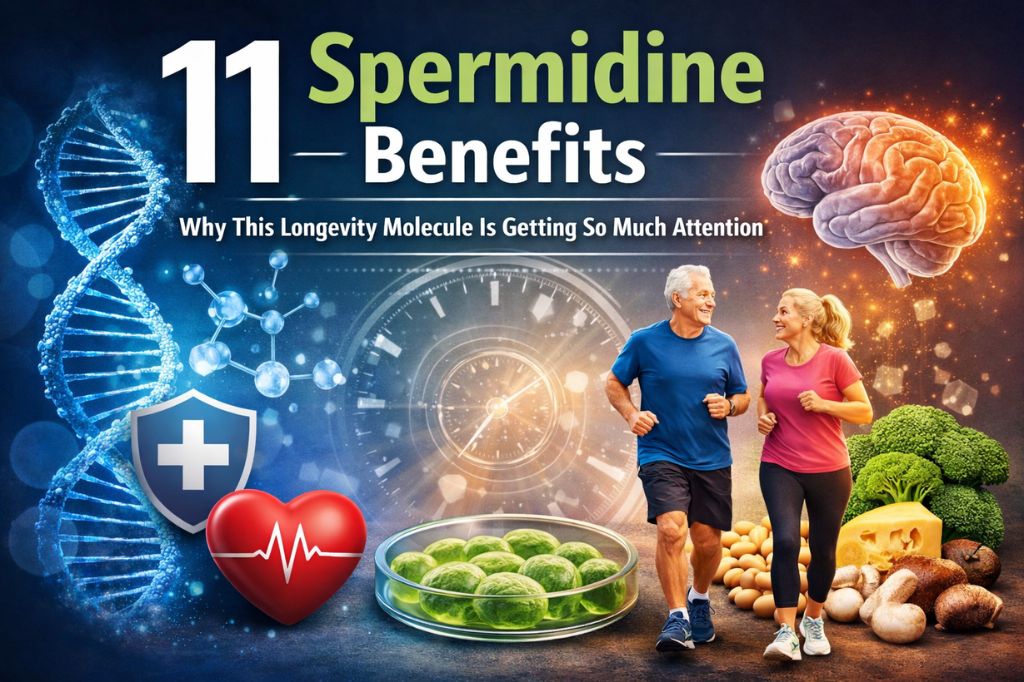
1. Promotes Autophagy (Cellular Renewal)
The most important spermidine benefit is its ability to stimulate autophagy, a process where cells break down and recycle damaged components.
Autophagy helps remove dysfunctional proteins and cellular waste that accumulate as we age. By clearing out these damaged components, cells can regenerate and function more efficiently.
Scientists believe this process plays a major role in healthy aging, longevity, and disease prevention.
2. Supports Longevity and Healthy Aging
Several studies suggest that spermidine may help extend lifespan and improve healthspan.
Animal research has shown that spermidine supplementation can increase lifespan in organisms such as yeast, flies, worms, and mice. In one study, mice receiving spermidine experienced about a 10% increase in lifespan along with improved cardiovascular health.
Large human population studies have also found that higher dietary spermidine intake is associated with lower mortality rates.
3. Improves Heart Health
Spermidine may help protect the cardiovascular system.
Research shows that it can support heart function by:
- Reducing inflammation
- Improving mitochondrial function in heart cells
- Supporting healthy blood pressure levels
- Protecting blood vessels
Higher dietary spermidine intake has also been associated with lower risk of cardiovascular disease and heart failure.
4. Protects Brain Function and Memory
Spermidine may play an important role in brain health and cognitive function.
Studies suggest it may help protect neurons from damage by:
- Reducing inflammation in the brain
- Supporting mitochondrial function
- Promoting autophagy in brain cells
A clinical trial in older adults found that spermidine supplementation improved memory performance and cognitive function after several months of use.
5. Reduces Inflammation
Chronic inflammation is one of the major drivers of aging and many diseases.
Spermidine has been shown to reduce inflammatory markers and cytokines, including IL-1β and IL-18, which are involved in inflammatory responses.
By lowering inflammation, spermidine may support healthier aging and help protect against conditions such as cardiovascular disease and neurodegeneration.
6. Supports Mitochondrial Health
Mitochondria are the energy-producing structures inside cells.
Spermidine helps stimulate mitophagy, a process that removes damaged mitochondria and replaces them with healthier ones. This improves cellular energy production and metabolic function.
Better mitochondrial function is associated with higher energy levels, improved metabolism, and better overall cellular health.
7. Protects DNA and Cellular Integrity
Spermidine can bind to DNA and RNA molecules, helping to protect them from oxidative damage.
This protective effect helps maintain genomic stability, which is crucial for preventing mutations and maintaining proper cellular function.
By protecting DNA, spermidine may help reduce age-related cellular decline.
8. May Improve Cognitive Decline and Neurodegeneration
Spermidine has shown promise in research on neurodegenerative diseases such as Alzheimer’s and Parkinson’s disease.
It helps reduce the buildup of misfolded proteins in the brain by activating autophagy. These protein accumulations are often associated with neurodegenerative disorders.
Although more human research is needed, early findings suggest spermidine may help slow age-related cognitive decline.
9. Supports Immune System Function
Spermidine helps maintain immune health by promoting the renewal of immune cells.
By removing damaged cells and encouraging the formation of healthier ones, spermidine may help the immune system function more efficiently.
This may improve the body’s ability to fight infections and maintain immune resilience as we age.
10. May Improve Hair and Skin Health
Some research suggests spermidine may support hair growth and skin health.
A clinical study found that spermidine supplementation helped extend the growth phase of hair follicles, potentially improving hair growth and thickness.
Because spermidine promotes cellular renewal, it may also help support healthier skin and tissue repair.
11. May Support Fertility and Reproductive Health
Spermidine may also support reproductive health.
Research suggests that it can reduce oxidative stress in reproductive cells and improve cellular repair processes. Studies in animal models have shown that spermidine may improve egg quality and reproductive function.
By reducing oxidative stress and supporting cellular health, spermidine may help maintain fertility as people age.
Spermidine is Found Naturally in Many Healthy Foods
Spermidine can be obtained naturally through diet. Some of the richest spermidine food sources include:
- Wheat germ
- Soybeans
- Mushrooms
- Lentils and legumes
- Green peas
- Aged cheeses (such as cheddar or parmesan)
- Broccoli and cauliflower
- Pears
- Corn
- Natto (fermented soybeans)
Because spermidine levels decline with age, regularly consuming these foods may help maintain healthy levels.
Final Thoughts
Spermidine is emerging as one of the most interesting compounds in longevity research. Its ability to stimulate autophagy, protect cells, and support heart and brain health makes it a promising nutrient for healthy aging.
While more human clinical trials are still needed, current research suggests that increasing spermidine intake—either through diet or supplements—may support overall health, longevity, and cellular resilience.
As scientists continue to explore its mechanisms, spermidine is likely to remain a key focus in the growing field of anti-aging and longevity science.